South Carolina’s conservation legacy has always depended on the people willing to carry it forward.
This year, the Hampton Wildlife Fund is proud to recognize nine students from across the state as recipients of its 2026 scholarships. These young men and women represent different communities, schools, interests and career paths, but they share something important: the opportunity to become the next generation of leaders and stewards of South Carolina.
For the Hampton Wildlife Fund, scholarships are about more than helping students pay for an education. They are an investment in people and in the future of the state we all call home.
“No matter where their careers take them, we hope every scholarship recipient carries forward a deep respect for conservation and a desire to protect the wild places that make South Carolina home,” said BeBe Dalton Harrison, Executive Director of the Hampton Wildlife Fund.
Congratulations to Our 2026 Scholarship Recipients
This year’s scholarship recipients are:
- Harry Hampton Scholarship — Stokes Scott, Hannah Pamplico High School
- Thomas Webster Hardwick Jr. Scholarship — Evans Hall, York Comprehensive High School
- James O. Thomason Scholarship — Annie Cecil, Conway High School
- R.M. Gifford Scholarship — Emery DuPre, Irmo High School
- David M. Cline Scholarship — Gianna Meehan, Carolina Forest High School
- Wallace F. Pate Scholarship — Lainey Patton, South Carolina Governor’s School for Agriculture
- Taylor Family SCDNR Scholarship — Sam Treptow, Wando High School
- Taylor Family Law Enforcement Scholarship — Laila Landrum, USC Upstate
- Spartanburg Legacy Scholarship — Grady Taylor, Veritas Classical Schools
Conservation Has Many Career Paths
Protecting South Carolina’s natural resources takes far more than wildlife biologists working in the field.
It takes law enforcement officers protecting wildlife and the people who enjoy it. It takes communicators who can tell the stories of our natural resources. It takes researchers, educators, policymakers, land managers and professionals in countless other fields who understand that conservation is a responsibility shared by all of us.
That is why Hampton Wildlife Fund scholarships support students pursuing a variety of academic and professional paths.
Wherever these students ultimately build their careers, the hope is that the lessons learned outdoors and their connection to South Carolina’s natural heritage remain with them.
A student studying fisheries biology may one day help manage a species important to South Carolina anglers. A future law enforcement officer may protect public lands and wildlife. A communicator may help an entire community better understand why conservation matters.
Different careers. Different contributions. One shared landscape.
An Investment That Reaches Beyond the Classroom
Scholarships can help open doors for a student, but their impact can extend much further.
Today’s recipient may become tomorrow’s scientist, conservation officer, teacher, community leader or advocate. Their work may influence wildlife management, protect habitat, introduce a child to the outdoors or simply encourage others to become better stewards of the resources around them.
That ripple effect is at the heart of the Hampton Wildlife Fund’s commitment to conservation education and youth development.
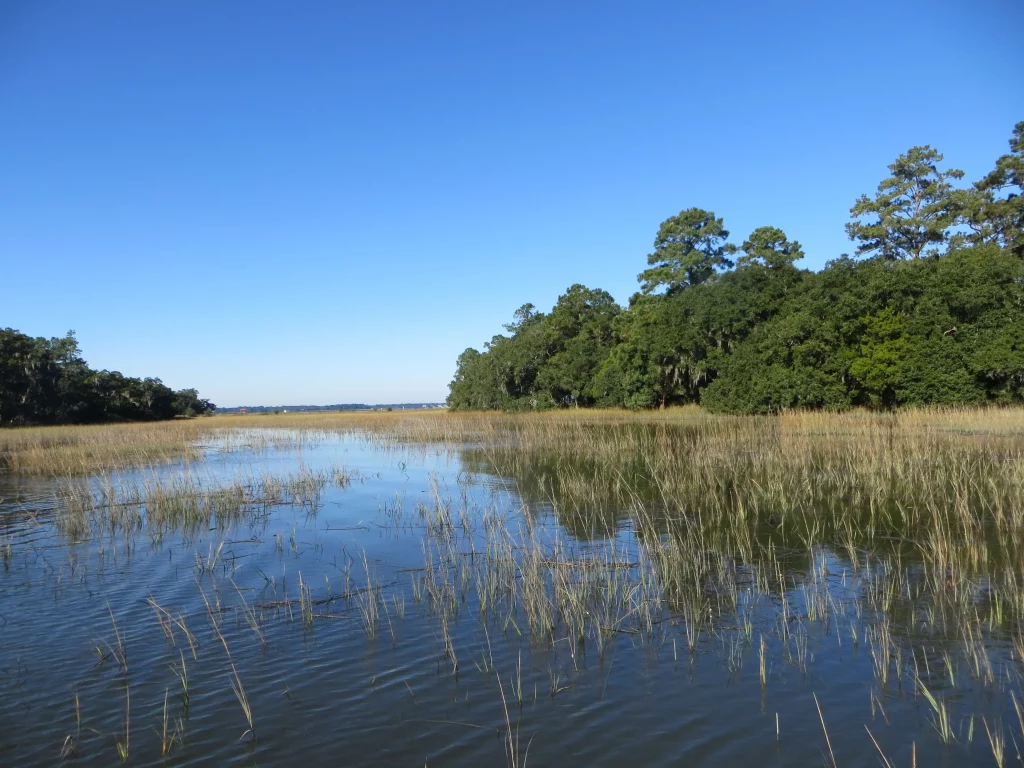
South Carolina is fortunate to have an extraordinary natural inheritance, from mountain streams and Piedmont forests to blackwater rivers, salt marshes and the Atlantic coast. Keeping those places healthy requires each generation to understand their value and accept some responsibility for what happens next.
The Hampton Wildlife Fund is proud to help these nine students take their next step.
Congratulations to Stokes, Evans, Annie, Emery, Gianna, Lainey, Sam, Laila and Grady on earning their 2026 scholarships. We also extend our gratitude to the families, teachers, mentors, donors, partners and supporters who have encouraged them along the way.
The future of conservation is not something that simply arrives.
We invest in it. We teach it. And, ultimately, we place it in the hands of the next generation.